AFTS (Audio Frequency Tone Shift) RATT NETS
AFTS terminal units of the AN/SGC-1 series and the newer CV-2460/SGC are reliable and "nettable"
items of the ship's TTY system. They are versatile equipments ideal for ORESTES nets within a task
group or task unit. For this reason, shipboard operators and technicians should understand their use
and features in order to get the most from them. There is no better way to learn the capability of an
equipment than by actual operation. This can be done easily by operators who want to become
proficient, using an authorized UHF drill frequency.
The AN/SGC-1 and the CV-2460/SGC series AFTS terminal units are DC-to-audio converters in the transmit mode. They receive DC from a teletype loop and convert it into audio frequencies for modulation of a radio transmitter (note: the transmitter must be in the VOICE mode, not MCW mode). For narrow audio frequency shift the high audio tone is 700 Hz and the low tone is 500 Hz. For wide shift (CV-2460/SGC only) the high tone is 2425 Hz and the low tone is 1575 Hz. Normally the high tone indicates a mark and the low tone indicates a space, but this relationship can be reversed at will.
In the receive mode the equipments are audio-to-DC converters. Audio from a receiver is fed into the terminal unit. The signal could have been transmitted either as AFTS or RFCS, as long as the receiver converts it to the proper tones.
Each terminal unit has a mode selector switch which can place it in constant XMIT or constant RCVE, or an AUTO position which permits it to switch to receive whenever a signal arrives from the receiver or go to transmit, keying and modulating the transmitter, whenever the local TTY keyboard is operated. This is ideal for net operation. The CV-2460/SGC has full duplex capability, permitting simultaneous use of transmit and receive functions.
The AFTS terminal units interface with other equipments via three basic inputs/outputs other than the
AC power connection:
1. A DC circuit which is looped through the TTY patch panel.
2. An audio input into which a receiver feeds tones.
3. A keying and modulation output by which the terminal unit controls a transmitter.
The equipment is very simple to use, and will function effectively provided that compatibility is maintained with the other parts of the system. The first point of concern is adjustment of the receiver that is used to receive the radio signals. If the output of the receiver is noisy when no actual signal is being received, the noise will trigger the terminal unit into a RCVE condition and it will not go automatically into the XMIT condition when the local teletype keyboard is operated. The noise output of the receiver must be kept low or squelched off during the time no signal is being received. Ideally, the no-signal noise level should be about -30 dB when the receiver output is set to supply audio tones at 0 dB. Noise from the receiver must not be allowed to trigger the terminal unit into a RCVE condition when no tones are being received. The second point is based on the transmitter modulation level that has been set on the ship. If all radiophone remotes are set to furnish -10 dB modulation level into the transmitter speech amplifiers, and the audio output of the AFTS terminal unit is set to furnish 0 dB, overmodulation will occur which will cause distortion and interference. If the output of the terminal unit is set for less than the standard RPU (Remote Phone Unit) modulation output, undermodulation will occur which will decrease the reliable communication range between ships. If the transmitter has a clipper-filter in its speech amplifier, this circuit should be turned off for tone operation; AGC (or AVC) circuits should be left on. The audio input and output levels from the TTY terminal unit should be set to furnish the same levels into the audio distribution system that the remote phone units furnish. Refer to Transmit-Receive Panels and Remote Control Units under Subsection 1-9 of the EIMB.
Don't overlook the "spread" between mark and space frequencies; 700 Hz and 500 Hz for narrow shift AFTS gives a spread of 200 Hz. The normal spread for single channel RFCS in the low frequency bands is 170 Hz. Either terminal unit can be used to copy narrow-shift RFCS of the type used on low frequencies when the associated receiver is set up properly. Just tune up the receiver to the desired signal as previously described in Tuning in A Single Channel RFCS RATT Signal, except that the receiver BFO is offset by -600 Hz rather than 2000 Hz (or 2550 Hz). The audio output from the receiver will be near enough to 700 Hz for mark and 500 Hz for space that the terminal unit can copy it. The CV-2460/SGC provides the additional capability of being able to copy wide shift RFCS single-channel circuits.
Either AFTS terminal unit can also serve as a part of single-channel UHF-to-HF relay circuits. It converts the AFTS signals received on UHF into a keyed DC loop current, and the loop current in turn operates the wide-shift RFCS circuits of the HF transmitter. Care must be exercised if the terminal unit and the HF transmitter have separate loop power supplies. The two power supplies must not be patched together. If such a risk exists, one solution is to wire the terminal unit to a miscellaneous jack on the TTY patch panel rather than to a looping jack. It can then be patched into either loop as required.
When the receiver input levels and the modulation output levels are properly set, and the mark and space frequencies are correct, the AN/SGC-1 and CV-2460/SGC series terminal units will provide reliable and versatile communications.
|
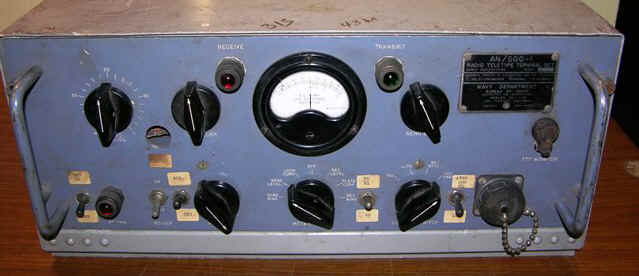
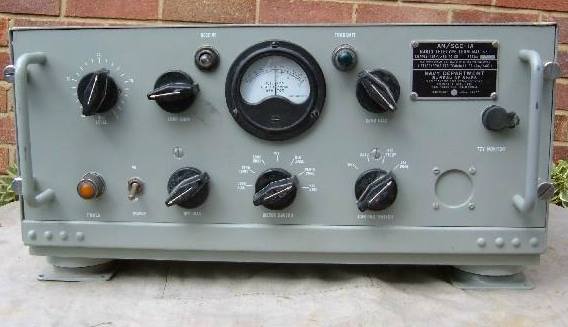
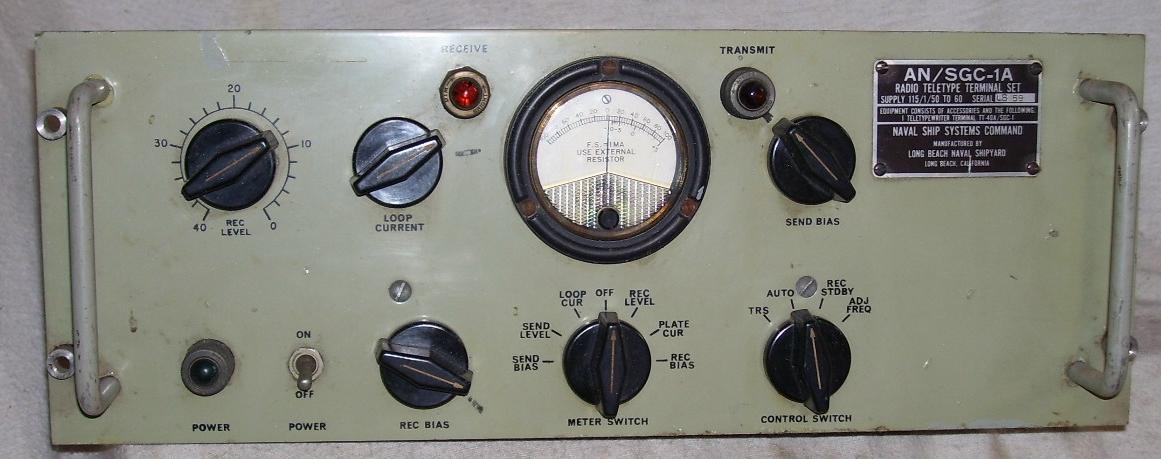
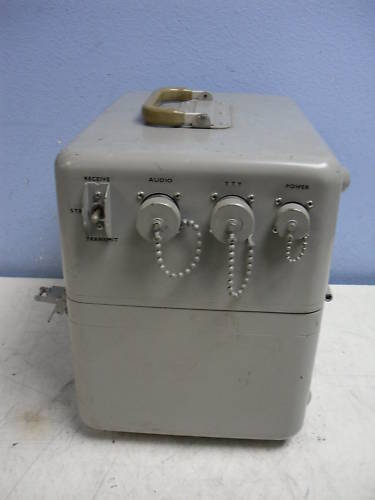
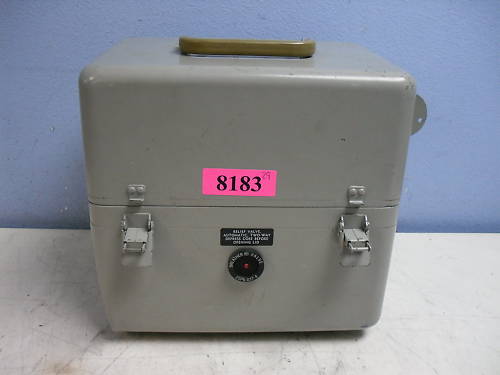
AN/SGC-1, AN/SGC-1A (TT-40/SGC-1, TT-40A/SGC-1)
|
![]() AN/SGC-1 |
Early AFSK Terminal Unit (demod and keyer) primarily used shipboard for UHF RTTY
links.
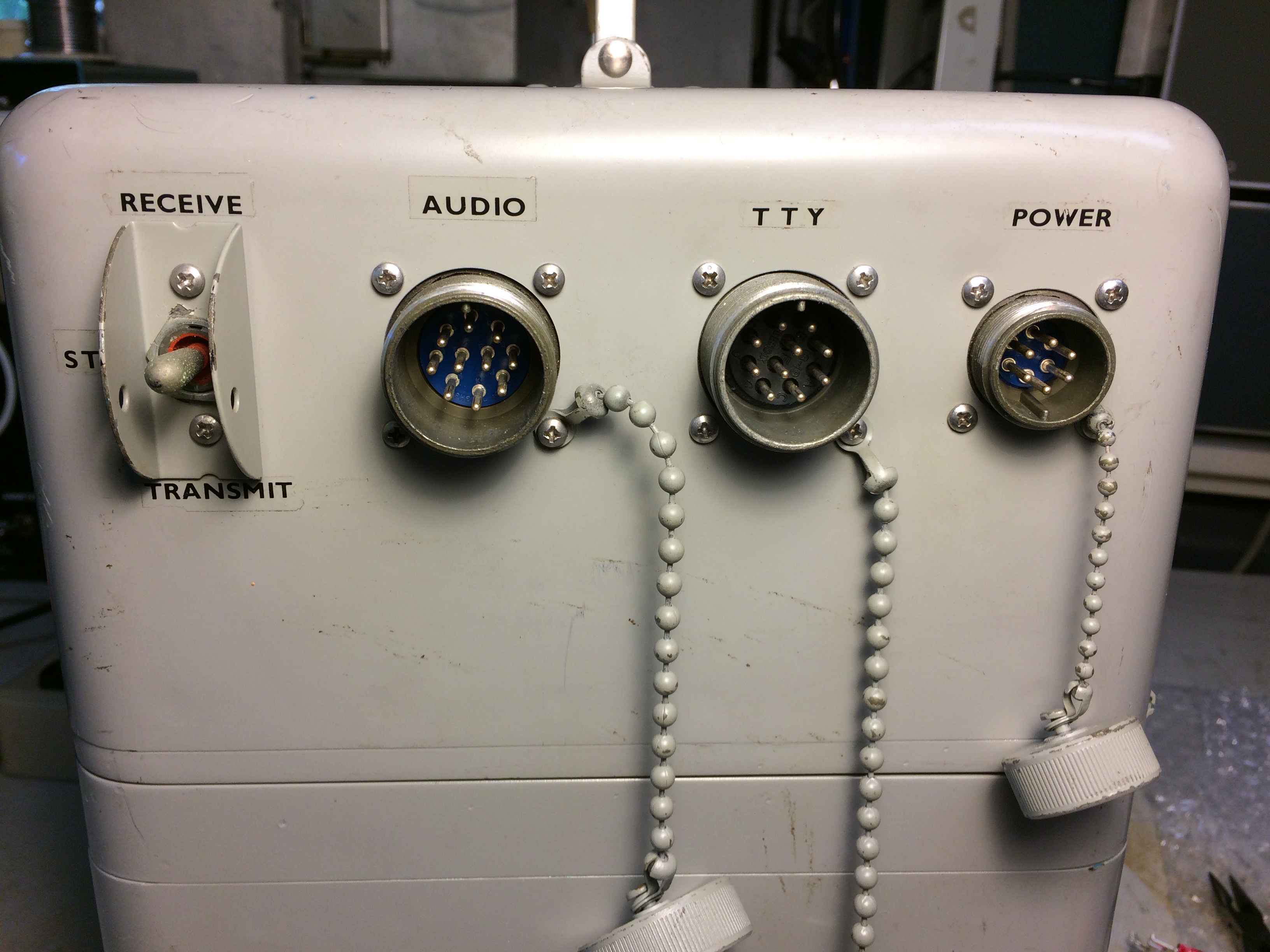
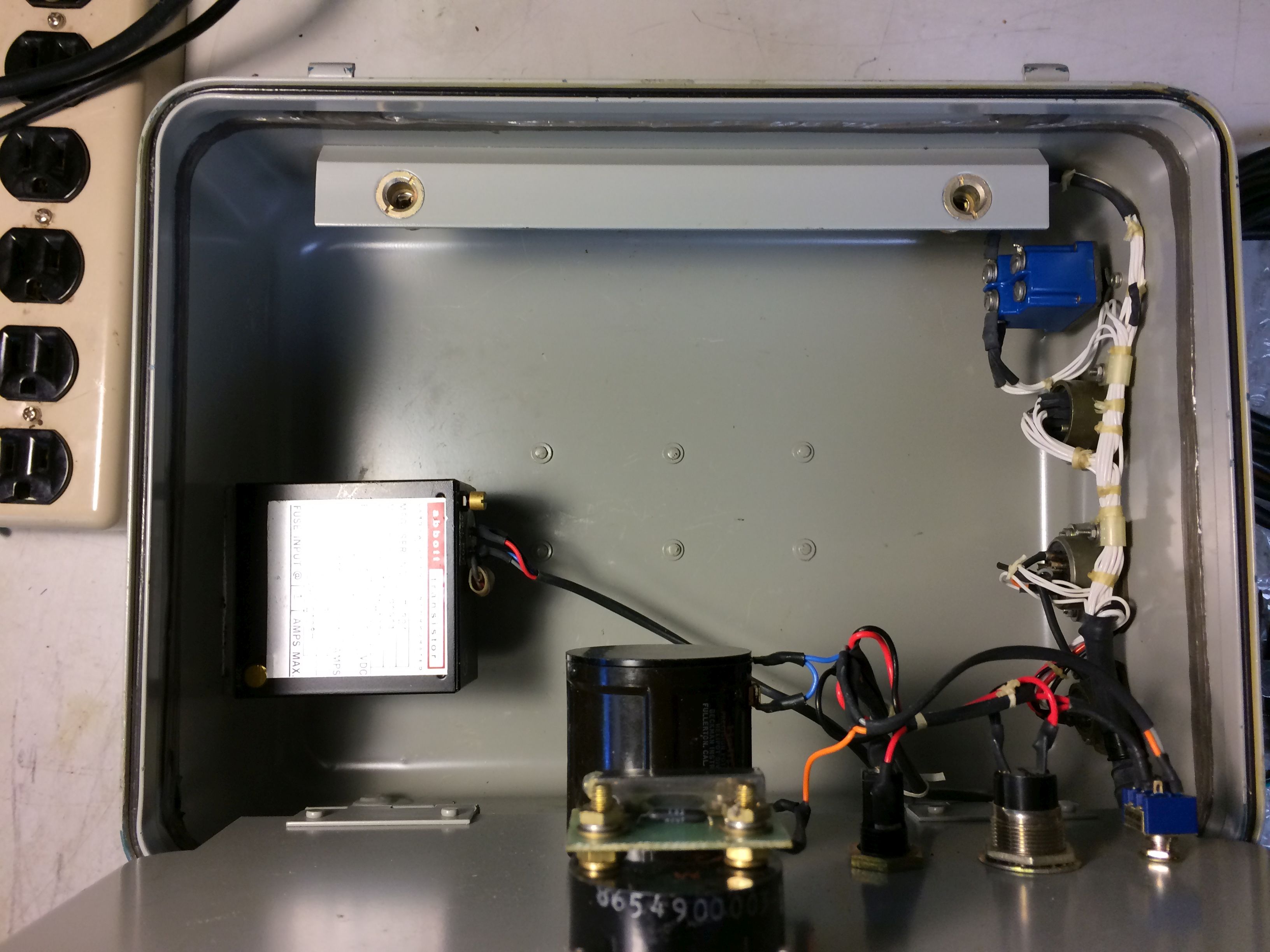
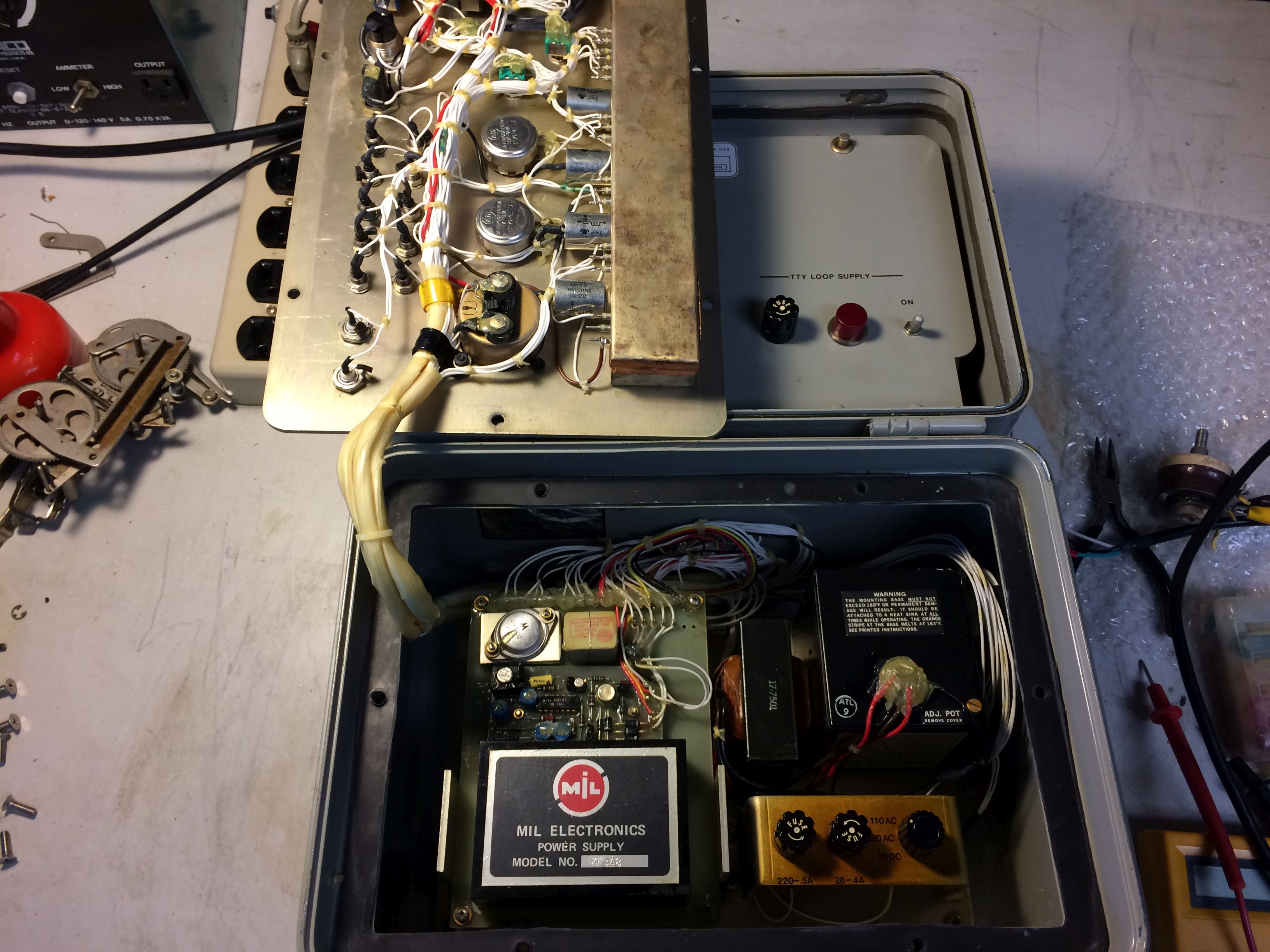
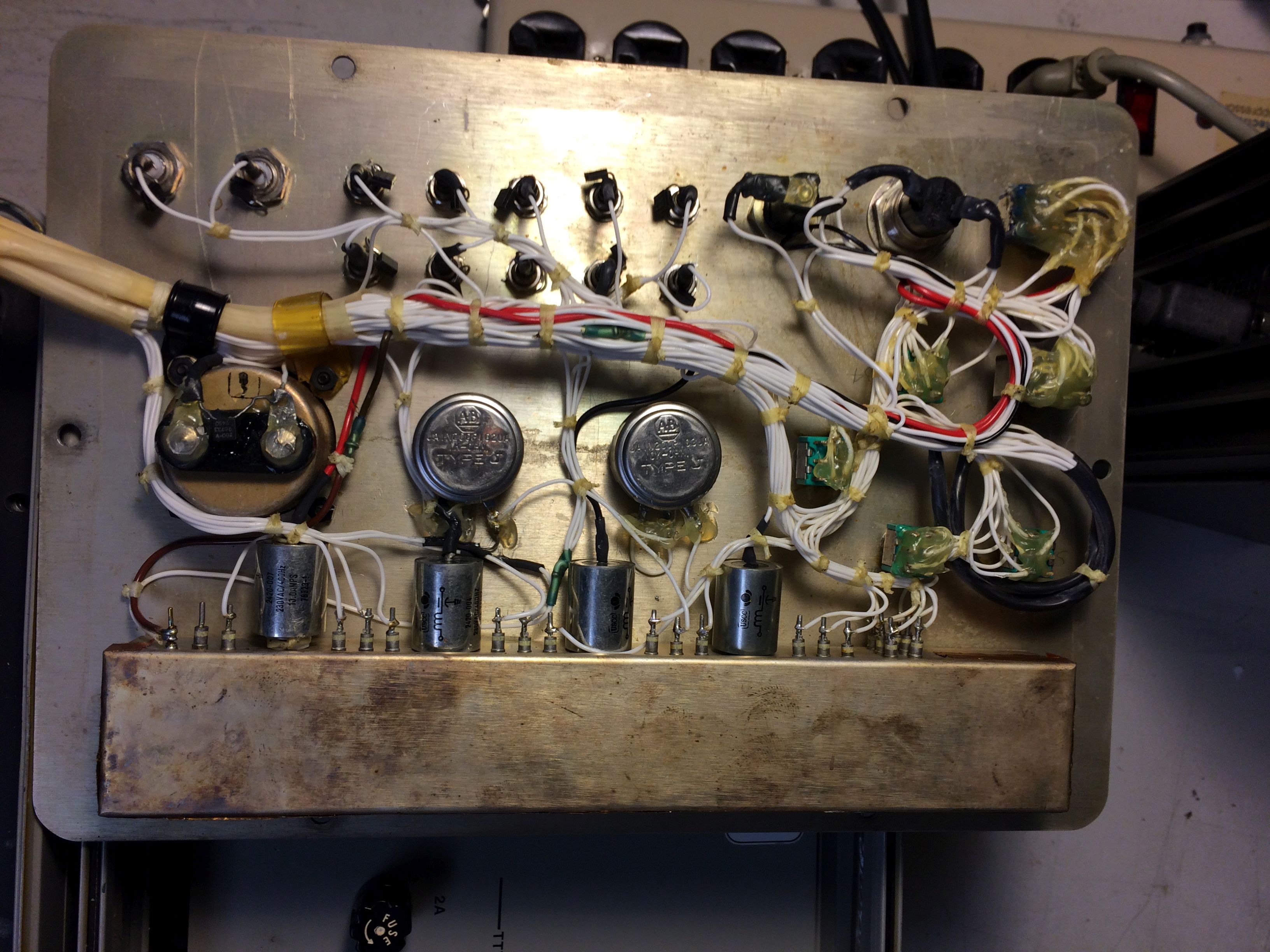
detailed circuit description and schematic See connection info below |
200 cps shift (700cps mark, 500 cps space). Can be readily converted to other
shift freq.
NAVSHIPS 91152 (SGC-1)
NAVSHIPS 91503 (SGC-1A) - available from WA5CAB manuf - Remler |
|
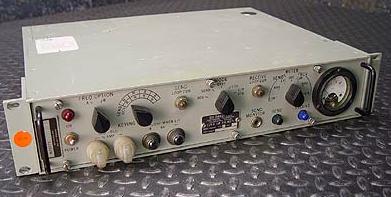
| CV-2460/SGC | ![]() |
AFSK Terminal Unit (converter and keyer) A = 500Hz space / 700Hz mark (UHF) Note: these are reverse polarity to CV-3510 below |
- | manuf - Stelma
manual NAVELEX EE162-AB-MMO-010/E110 |
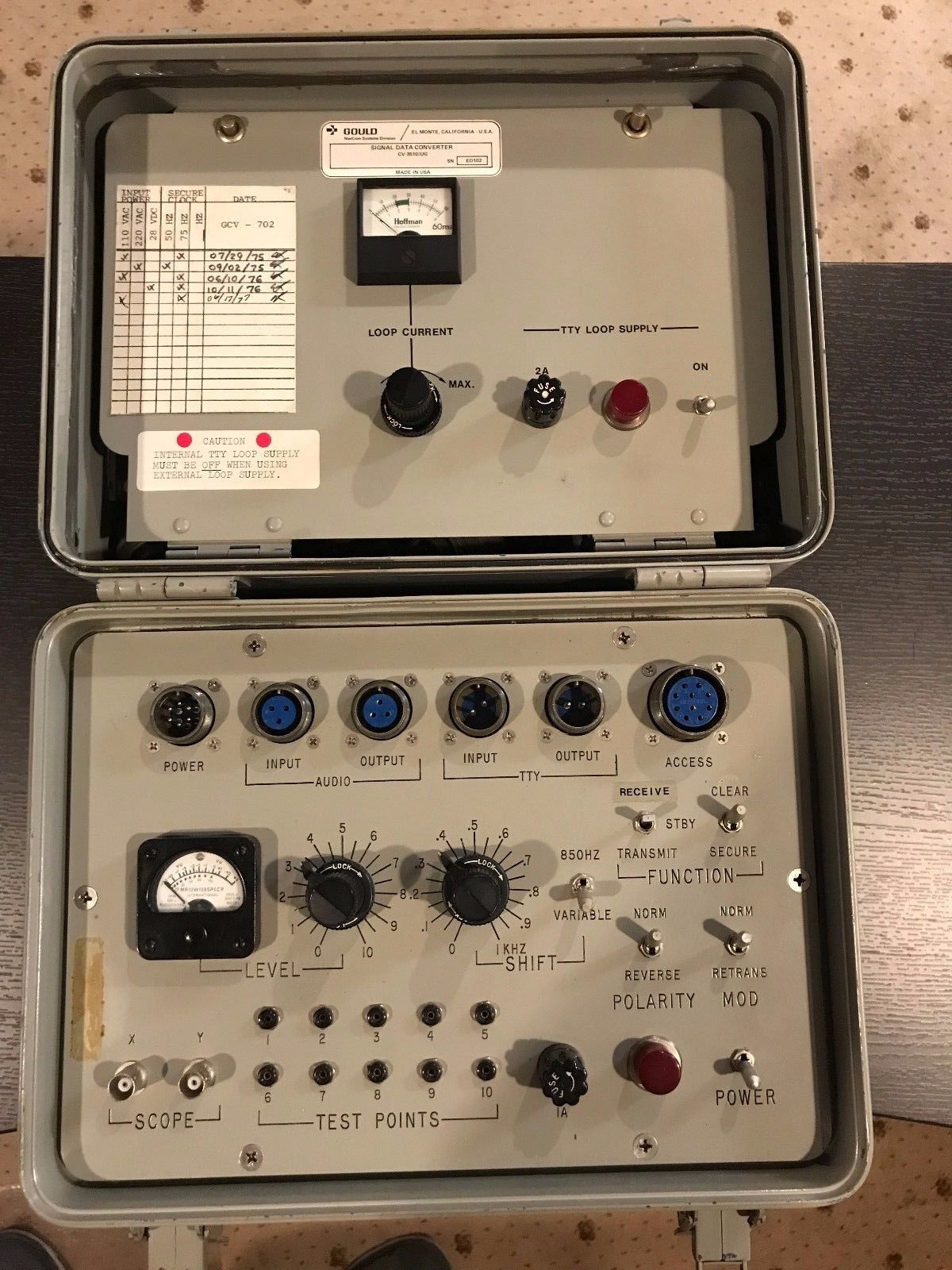
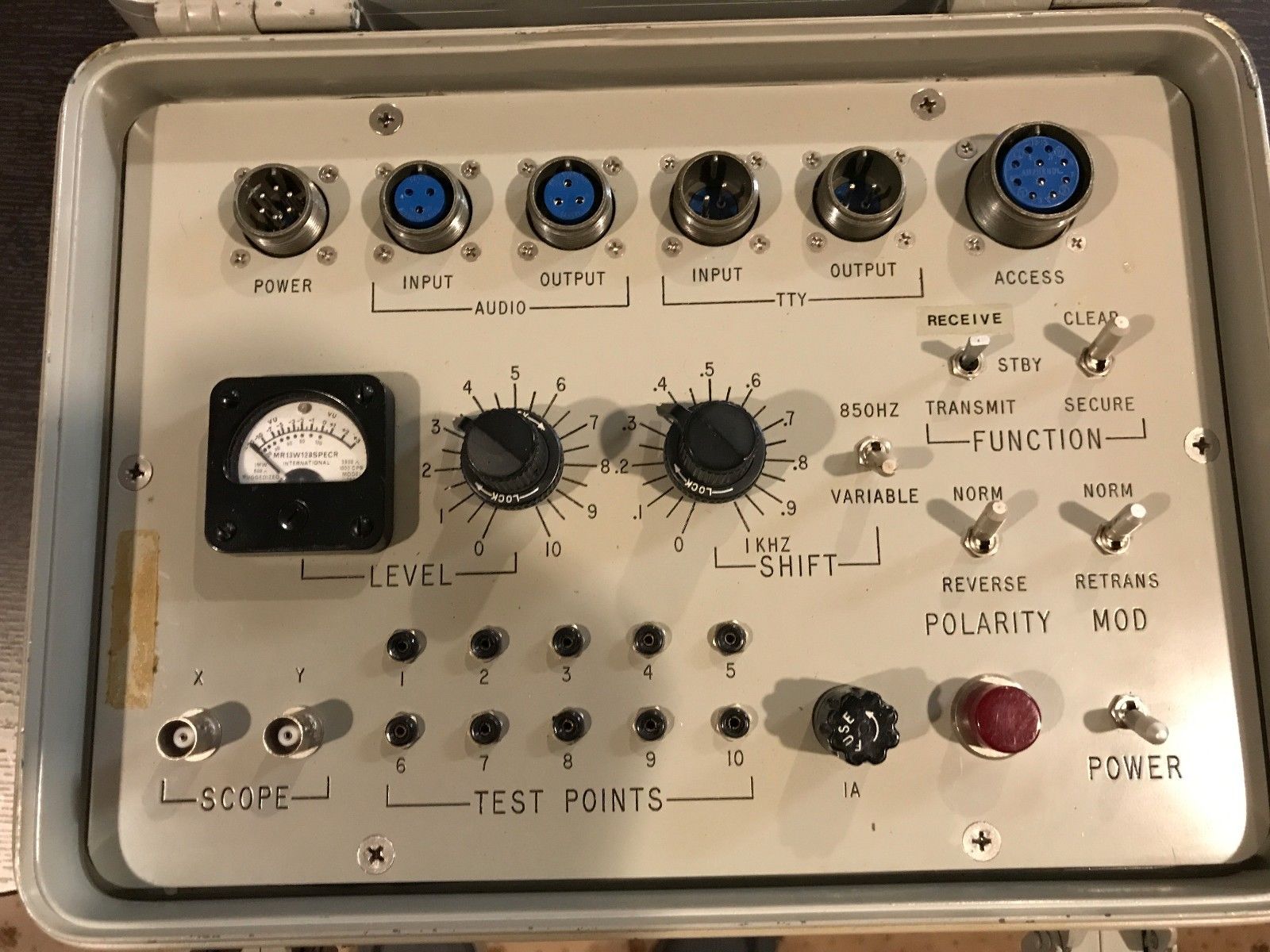
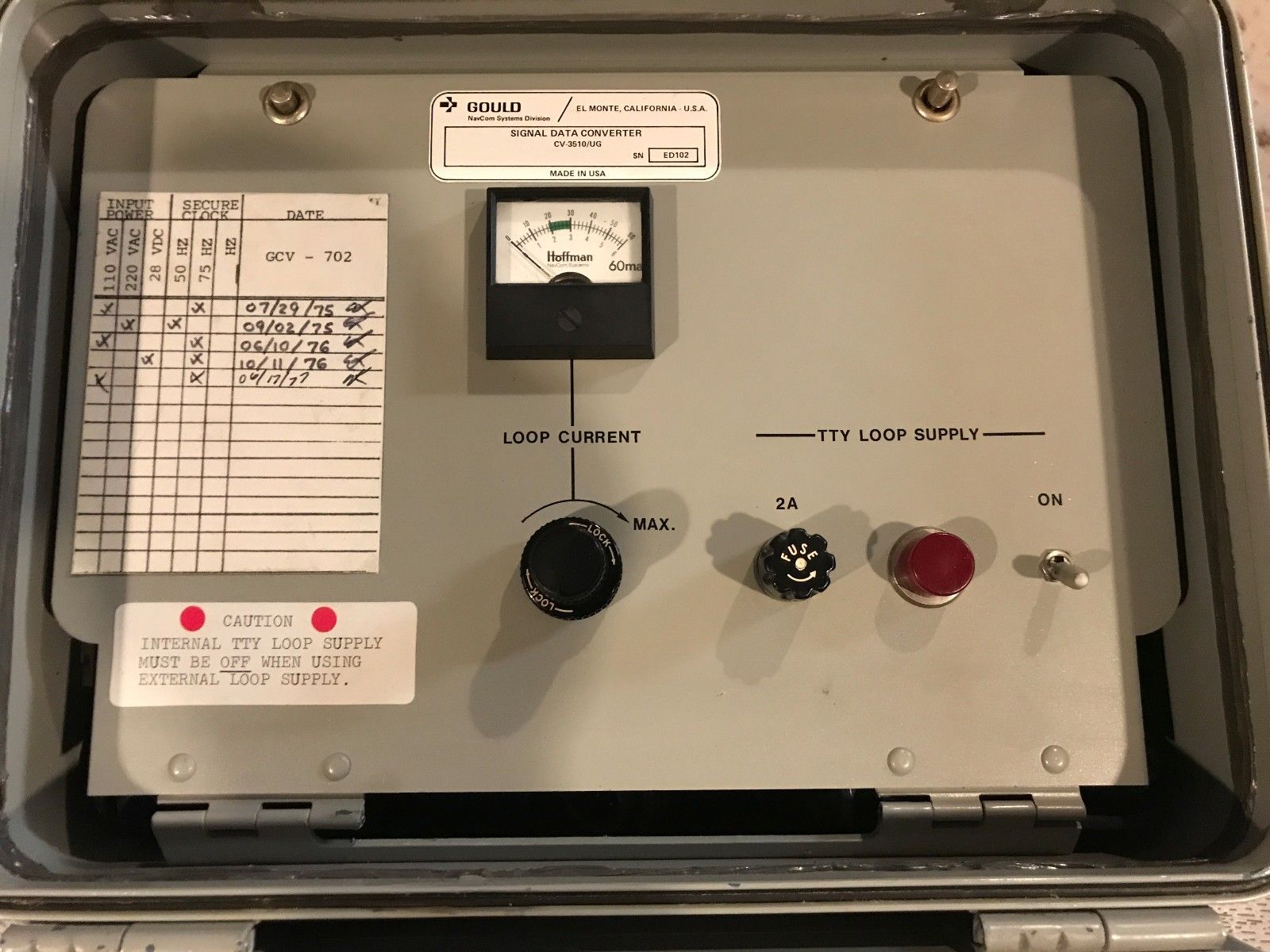
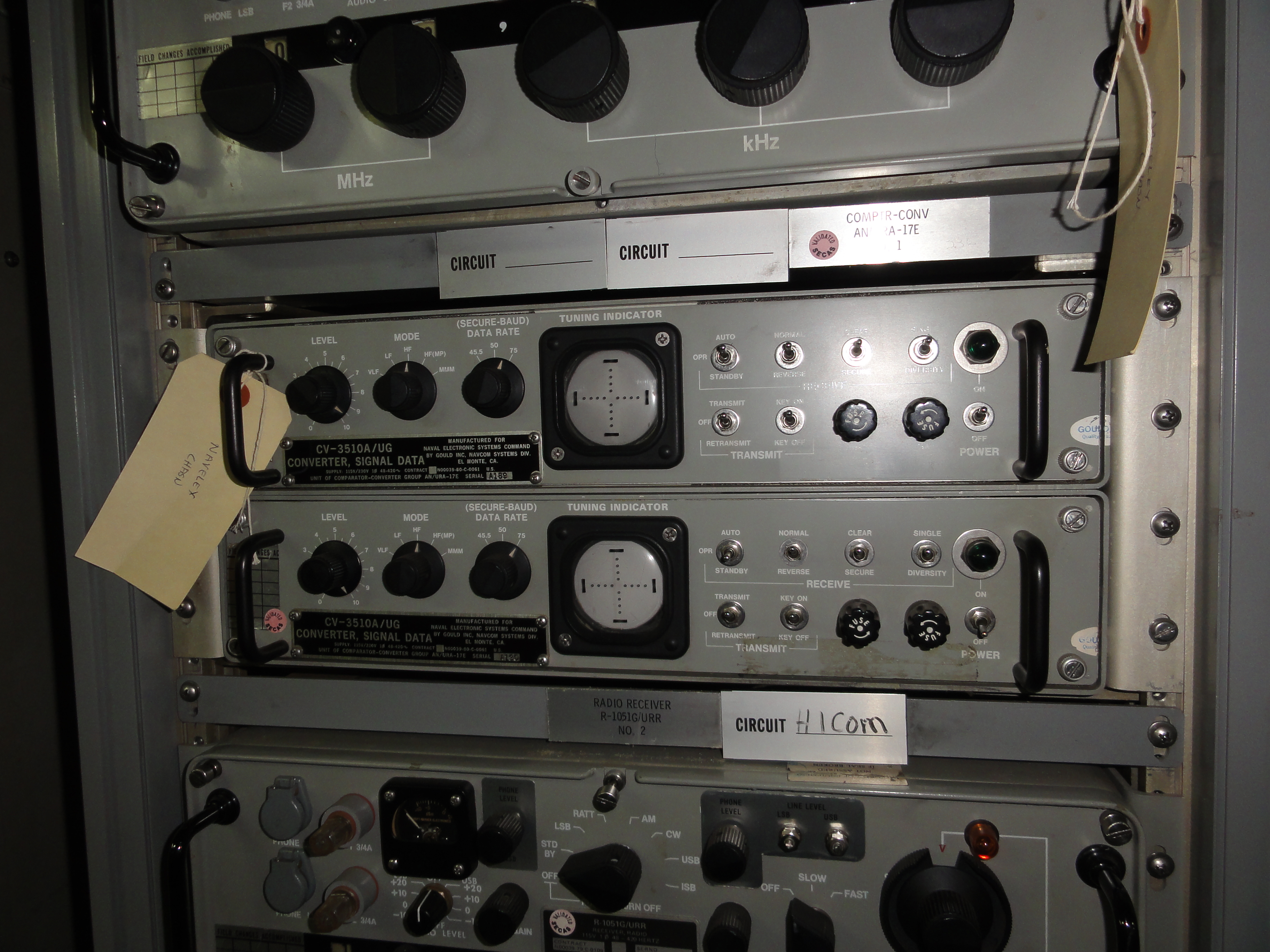
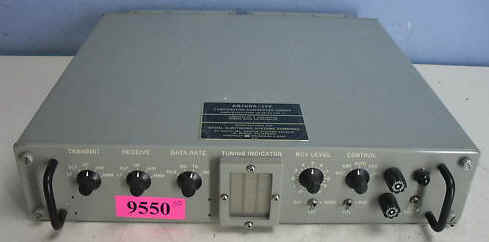
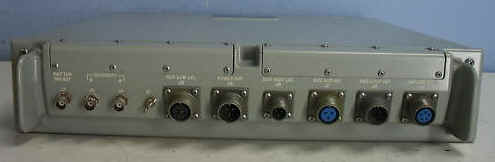
| CV-3510A/UG
AN/URA-17E diversity system comprises two CV-3510A |
CV-3510A
|
AFSK Terminal Unit (converter and keyer) VLF= 1000 Hz mark / 1050Hz space |
- |
manual info to come
Manuf Gould Navcom Manual is EE162-AH-OMI-010/E110 URA17E |
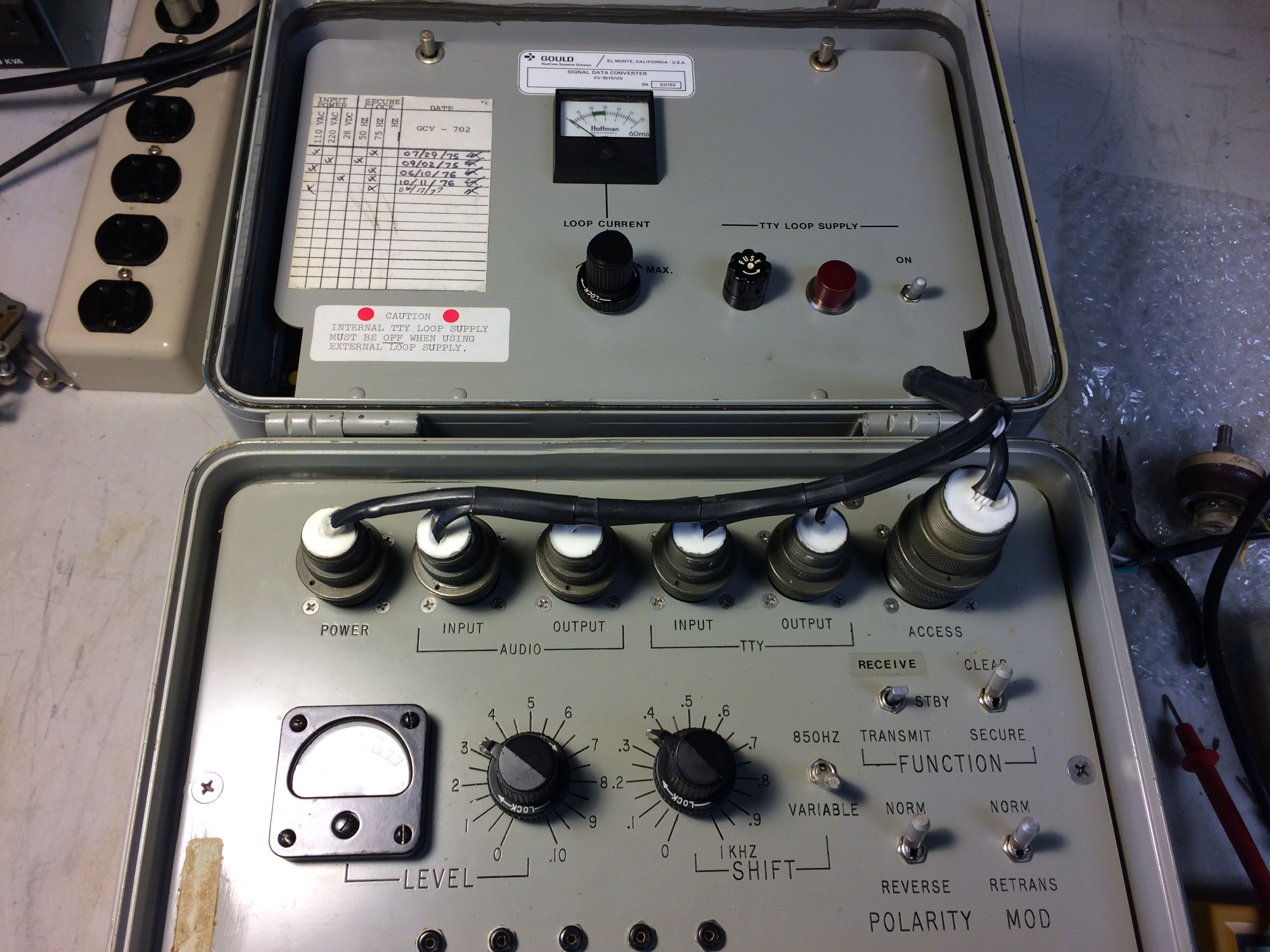
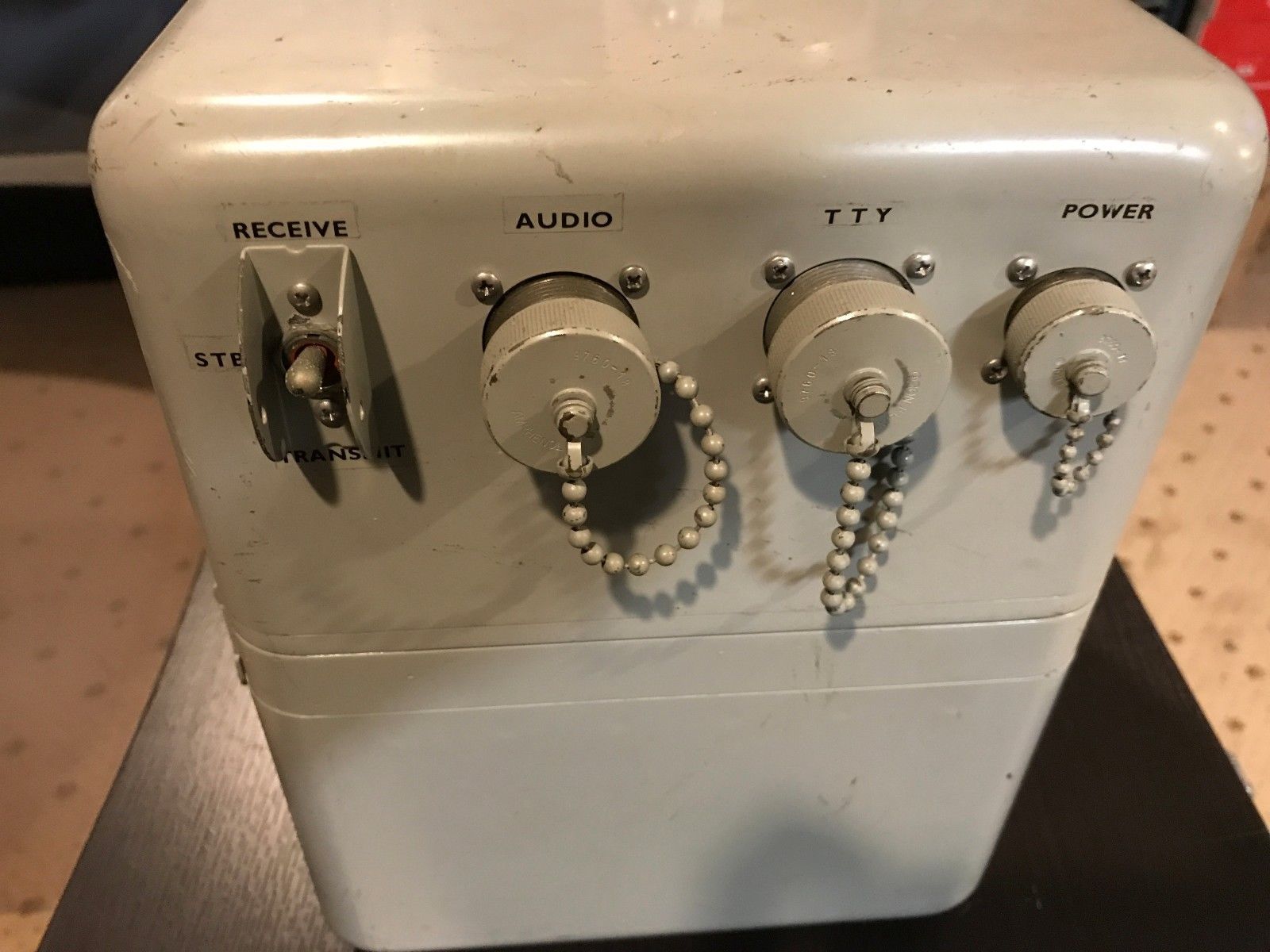
| CV-3510A Test Set | ![]() |
![]() |
![]() |
|
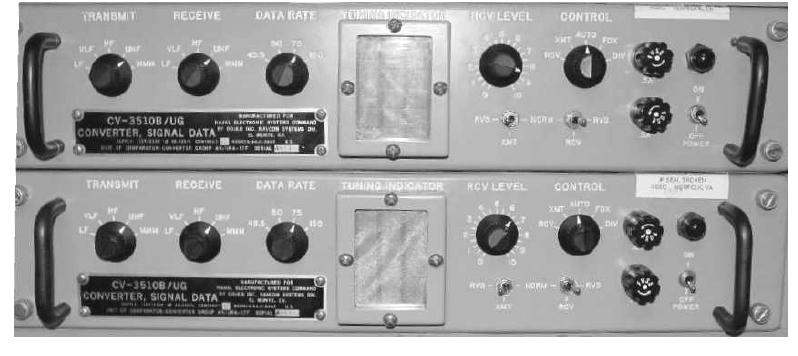
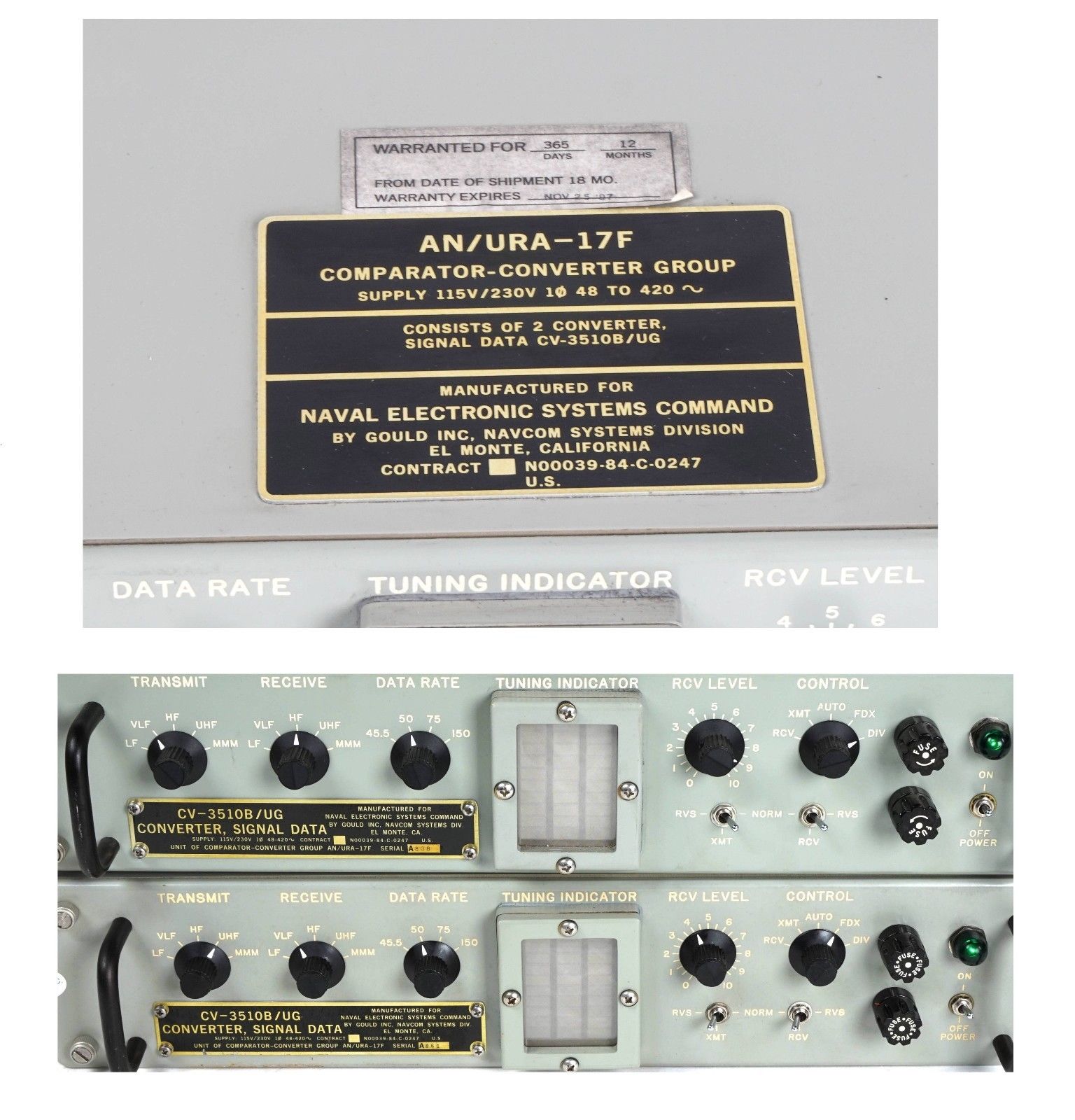
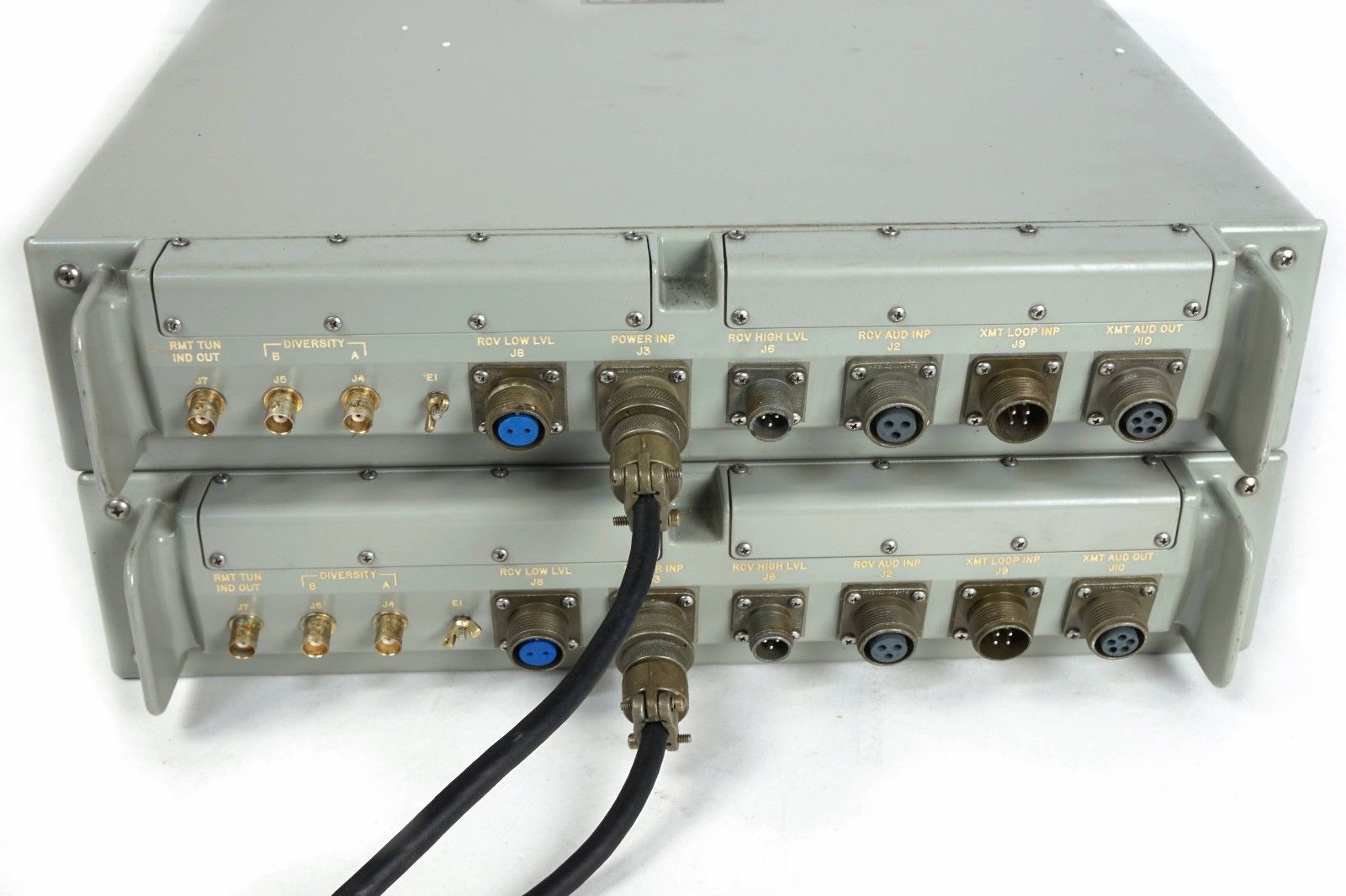
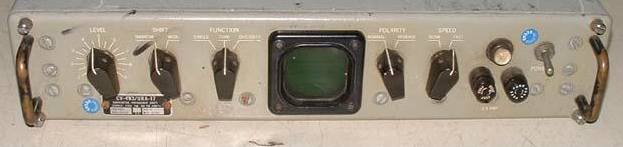
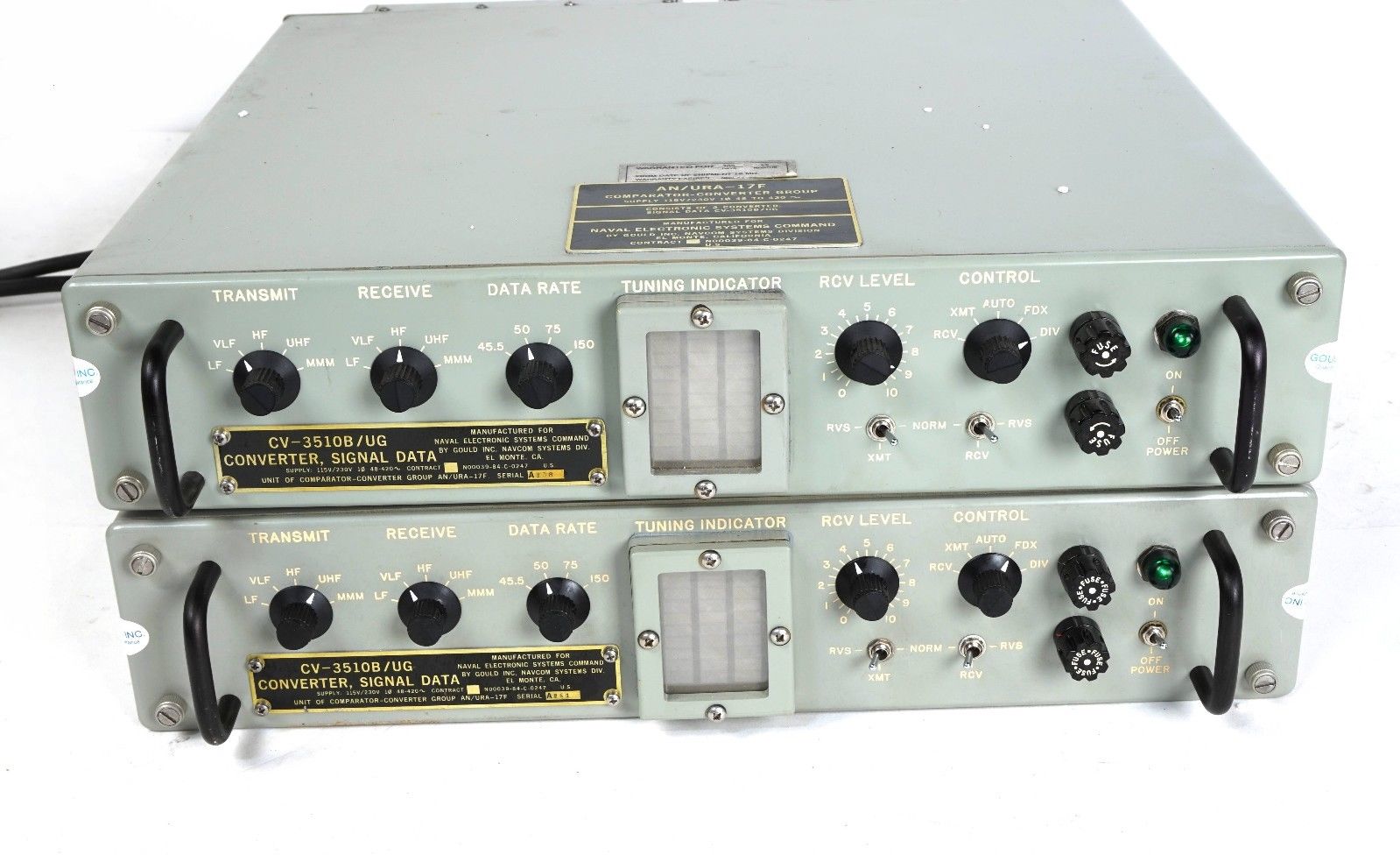
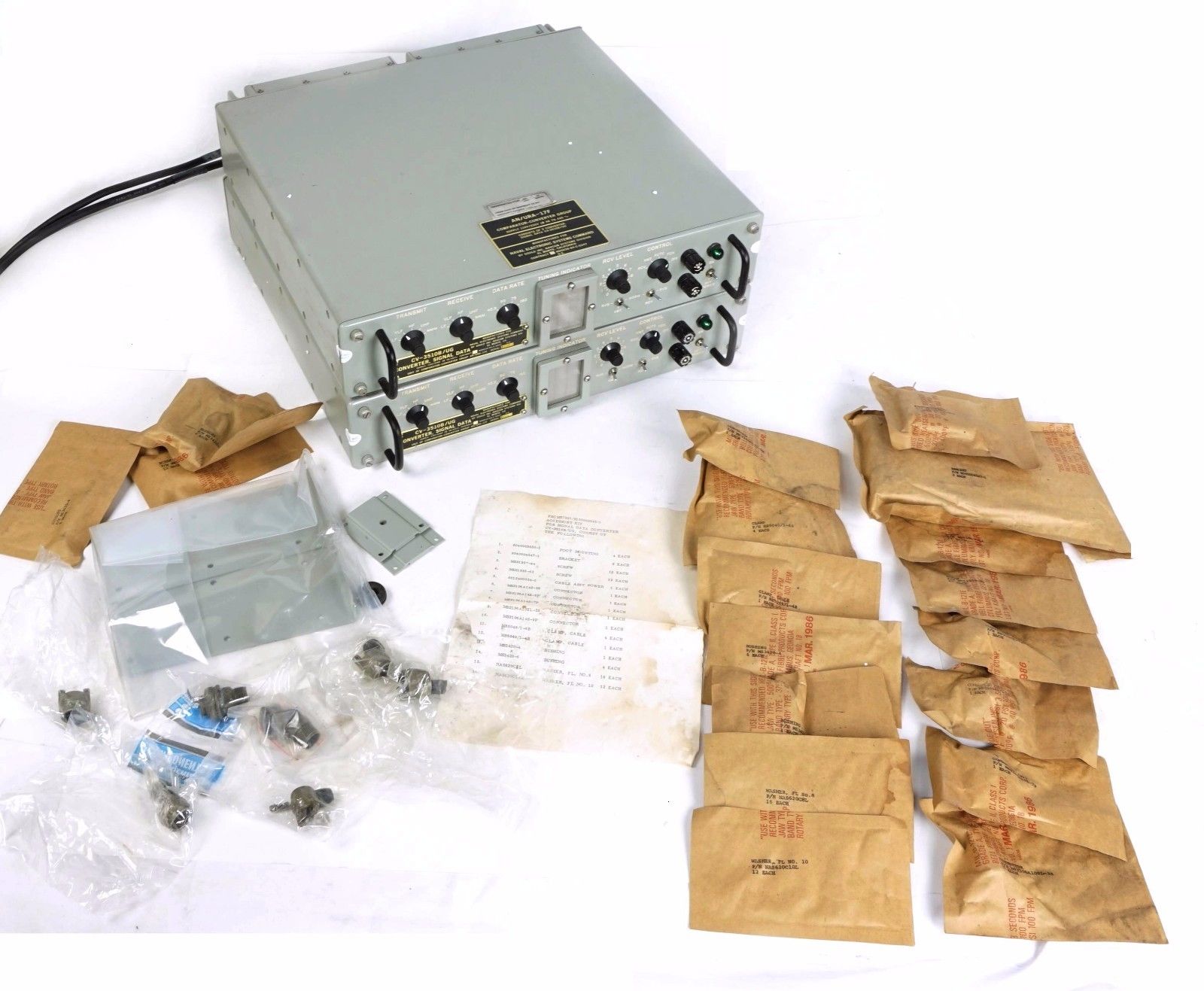
| CV-3510B/UG
AN/URA-17F diversity system comprises two CV-3510B |
|
AFSK Terminal Unit (converter and keyer)
VLF= 1000 Hz mark / 1050Hz space |
manual NAVSHIPS 0967-LP-340-0010 Technical Manual for Comparator- Converter Group AN/URA-17F |
|
| Note: AN/URA-17, -17A, -17B, -17C, -17D are receiving converter systems only, using CV-483/URA-17 | ||||
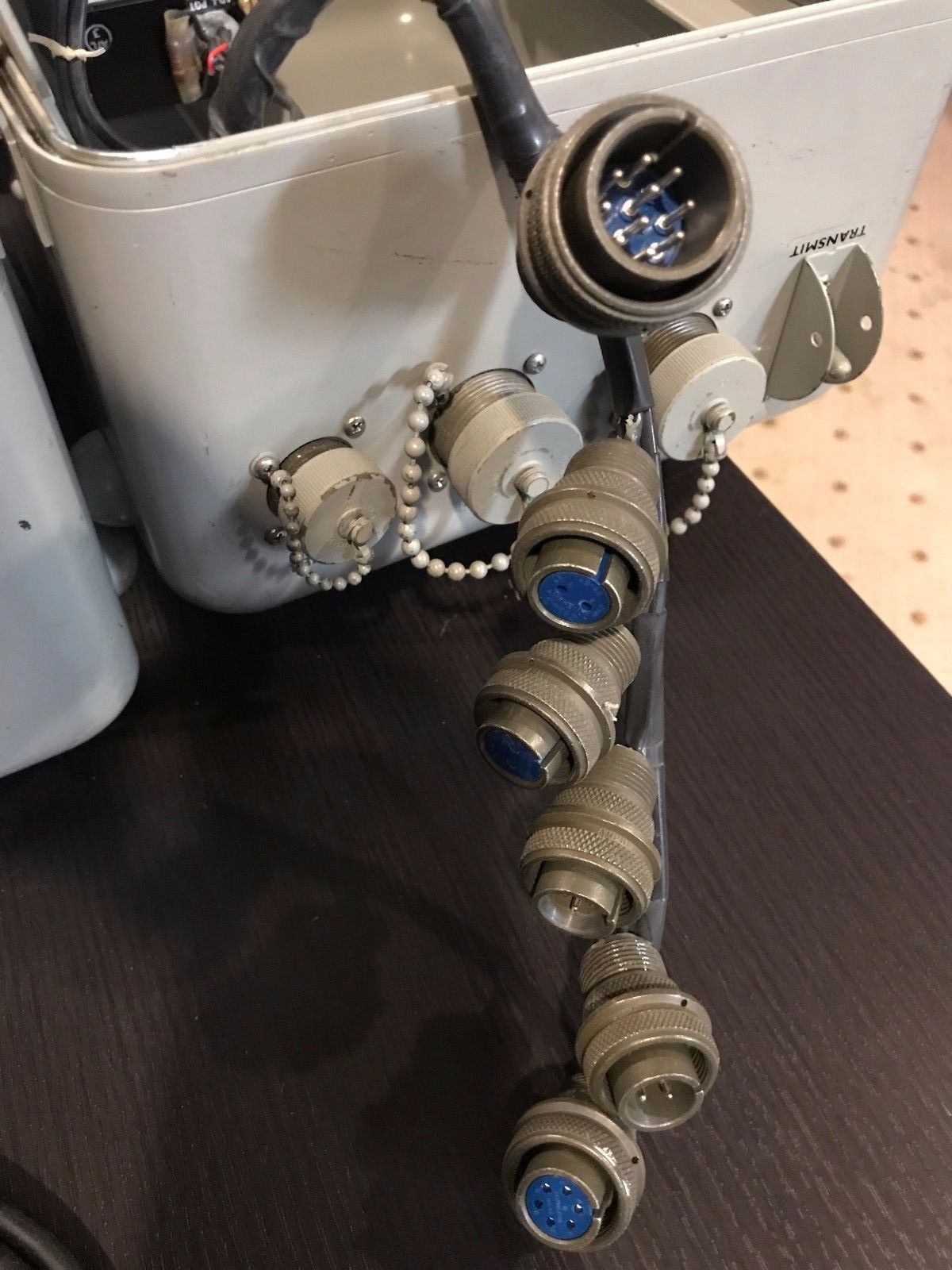
| CONNECTOR | TERMINAL STRIP |
SIGNAL | COLOR | CONNECTOR | TERMINAL STRIP |
SIGNAL | COLOR | |
| J108 (7 pin) | J107 (8 pin) | |||||||
| A | 5 | AF IN | BLK | A | 7 | TTY | BLK | |
| B | 6 | AF IN | YEL | B | 8 | TTY | YEL | |
| C | 3 | AF OUT | BLK | C | 2 | 115vac | RED | |
| D | 4 | AF OUT | RED | D | 1 | 115vac | GRN | |
| E | 9 | ??? | YEL | E | 12 | ground | RED (control?) | |
| F | 10 | ??? | BLK | F | 11 | control? | BLK | |
| G | - | - | - | G | case | ground | WH/BLK | |
| H | - | - | - |